
The one equation: daily profit
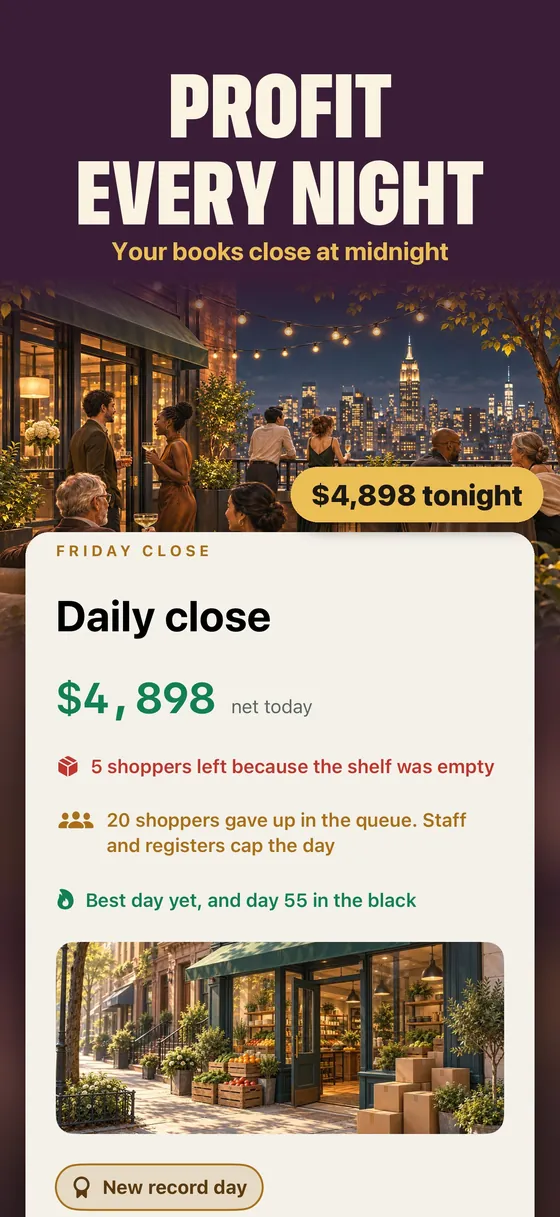
Daily profit = units sold × (price − unit cost) − wages − rent − tax. Every decision in a business sim moves one of those terms:
| Lever | What it moves | The catch |
|---|---|---|
| Price | Margin per sale | Fewer shoppers accept a higher price |
| Stock | How many units can sell | Cash tied up, storage, spoilage |
| Staff | How many shoppers you can serve | Wages every block you open |
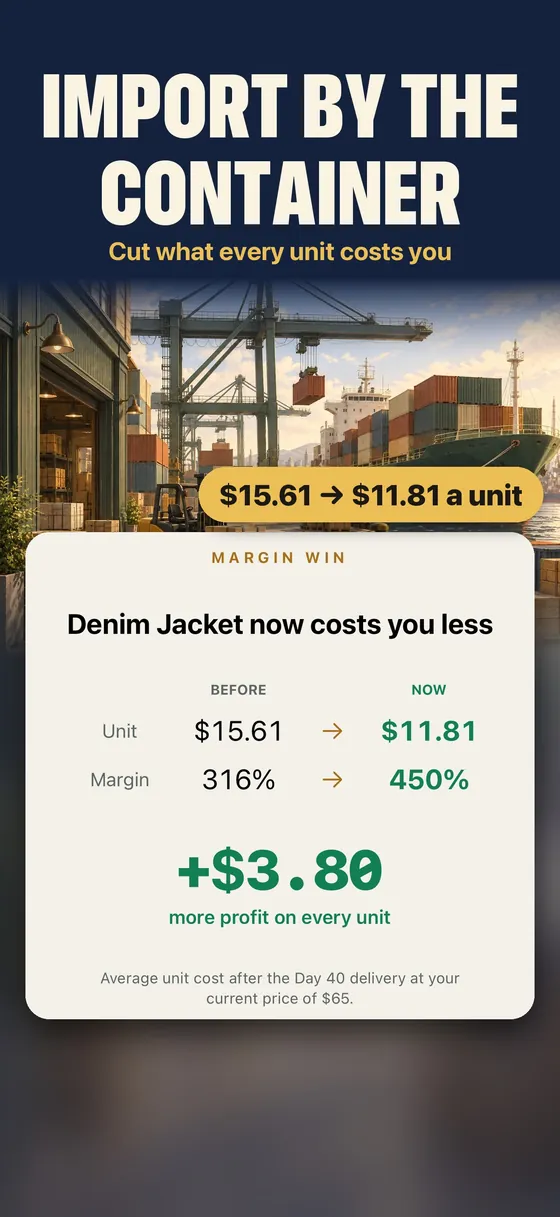
| Supplier | Unit cost | Minimum orders and delivery time |
| Location | How many shoppers walk past | Rent |
In City Ambitions the Daily Close at midnight shows each term, so you can see which lever moved.
Demand: who comes, and who buys
Shoppers come from the neighborhood's foot traffic and from your regulars. Each one compares your price with the product's market price. In City Ambitions the share who still buy falls as your price rises above market; the full curve is in how pricing works.
So the best price is rarely the market price. It is the price where units × margin is highest, and that depends on whether you can serve everyone anyway.
Capacity: the cap nobody sees
Sales are the smallest of three numbers: shoppers who want to buy, units on the shelf, and shoppers your staff can serve. Raising any of the others does nothing while the smallest one holds.
- Shelf is the limit: order more, or more often.
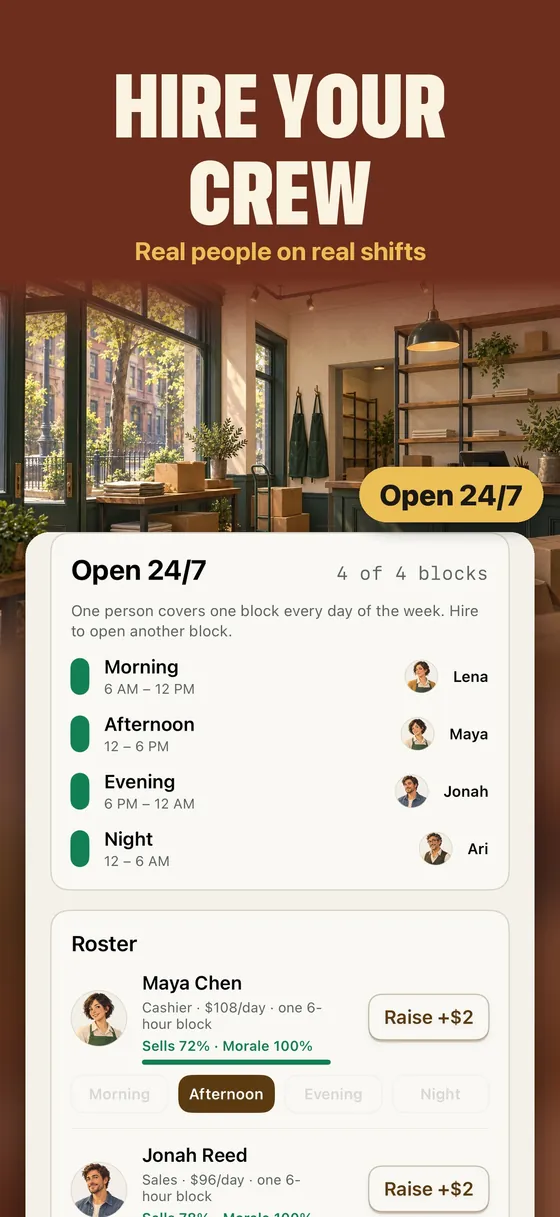
- Staff is the limit: hire for the busy block, or raise the price so the shoppers you serve pay more.
- Demand is the limit: lower the price a little, open better hours, or earn regulars.
Unit cost: the lever that scales
A lower unit cost raises profit on every sale in every store. In City Ambitions the path is local wholesale, then storage and bulk orders, then container imports (pay up front, by letter of credit or on landing), then a factory that makes the product from raw materials. Each step cuts the cost but ties up more cash for longer. See stock, storage and containers.
Fixed costs: rent and wages
Rent is paid whether you sell or not, and a staffed block costs wages even when it is quiet. That is why a second store only pays once the first one is profitable, and why closing a dead block can raise profit without a single extra sale.
Cash versus value
Profit is not the same as cash. Stock you bought is still worth its cost; a container in transit is cash already spent. City Ambitions' goal is measured in company value, not cash, which changes how you plan the last weeks. See how to clear $100,000 of debt in 180 days.
Questions
Should I price at the market price?
Start there, then raise it step by step. If your staff cannot serve everyone, a higher price earns more from the same shoppers.
Why is my shop busy but not profitable?
Usually staff or shelf is the limit, or wages for quiet blocks eat the margin. Check which number is smallest: demand, stock or service.
When should I open a second store?
When the first one is full every day and profitable after rent and wages. A second weak store doubles the losses.
Where can I practise this?
The daily pricing puzzle and the browser demo both run on City Ambitions' real numbers.